Hi, I’m Ross.
I’d wanted a bobber since I was a kid. The Sport Scout had the engine, cruise control, and look I wanted. Once I bought it, I wanted to go places.
I’m a dad, I work in Southern California’s beverage business, and I spend much of my time off at the beach, on a trail, or riding.
How Ruckline started
Storage was a problem from the day I left the dealer. The rack options I found meant changing my seat or paying for something that didn’t meet my needs. I also wanted to replace the plastic radiator cover. The pulley cover is the next design, and my goal is to work through the rest of the plastic-finished pieces on the bike.
So I started in my garage with a cereal box and a tape measure. I measured the Scout, made cardboard mockups, and had the first Hardpoint prototype cut and bent in aluminum. It fitted. Other riders started asking where they could get one.
The drawings and mockupsWhat Ruckline means
The name started with the rack. I was thinking about rucking, from training with a loaded pack to a military ruck. You’re carrying weight and asking your equipment to carry its share. That felt right for the first part I wanted to make.
The “line” comes from holding the line. To me, that means setting a standard for the work and sticking to it. Choosing the right material, taking care with the fit and finish, and working through the details instead of leaving them for the rider to deal with.
I wanted Ruckline to be a name that suggests strength and care. The parts have to earn that trust. For the first rack, I chose a one-piece aluminum design and started checking it on my own Scout. The fitting, riding, and testing are how I’ll find out whether it meets the demands I’m making it for.
That’s where “Carry What Matters” comes from. It connects the gear you bring with the care that goes into making something to carry it.
My design background
I worked in architectural signs and graphics, from design through production and installation. That included Integrated Sign Associates from 2004 to 2012, followed by independent work coordinating with developers, architects, and municipalities.
Projects ranged from high-rise signs to monuments. Highlights included graphics for Sony’s North American corporate headquarters and the retrofit of San Diego’s Gaslamp sign, along with work for Wendy’s, Nike, Papyrus, and others.
Ruckline gives me a way to apply that experience to something I ride. More about my work and life is on my personal site ↗.

Small batches, as the parts are ready
I’m building Ruckline without a warehouse full of inventory. When a batch sells out, I’ll make the next one.
Before I offer a design, I’ll fit it and ride it on my own Scout. Product pages show what’s been done so far and what still needs testing.
Why I keep riding
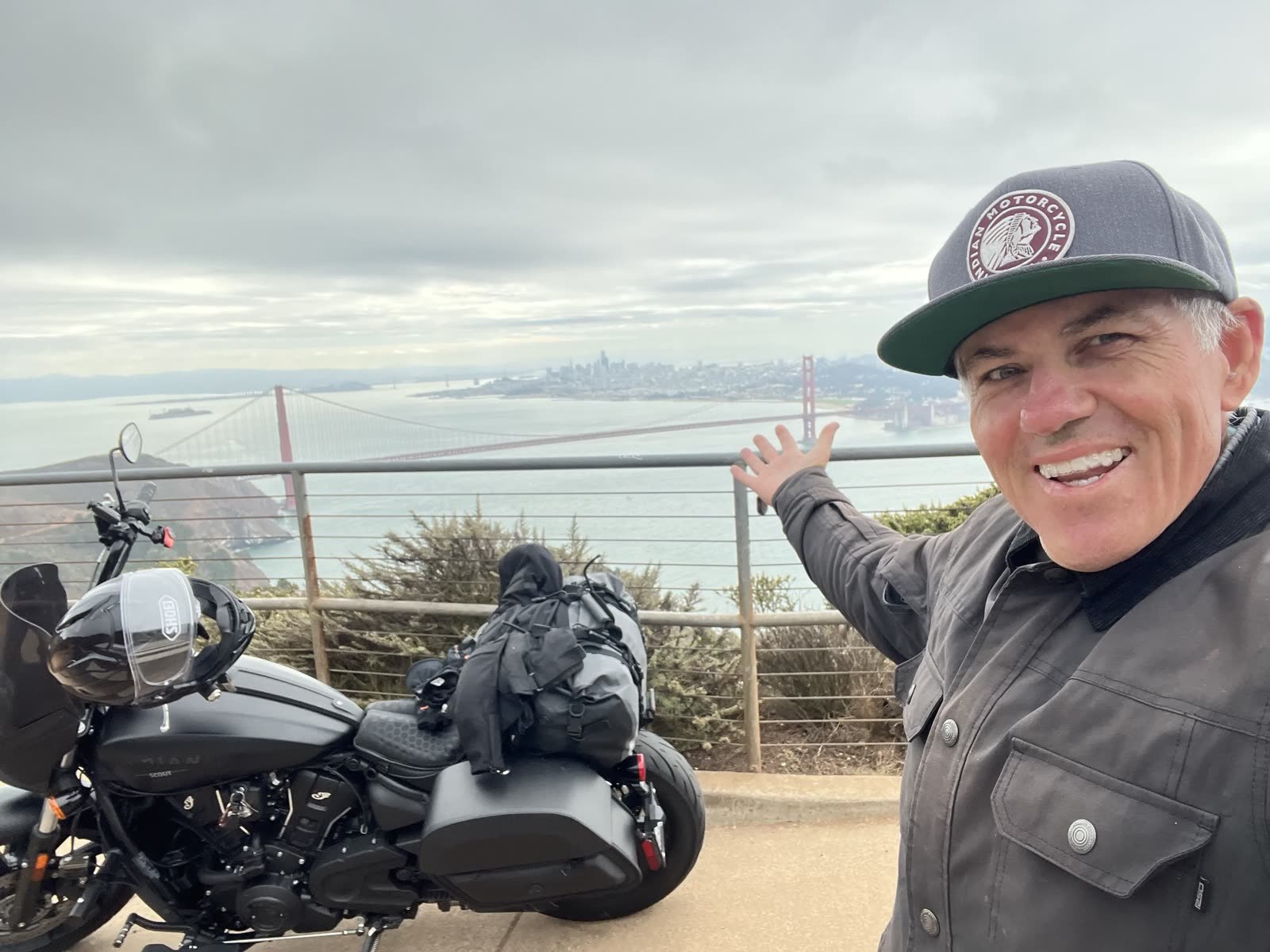
Crossing the Golden Gate, riding among the sequoias, and exploring the desert have given me memories I’ll talk about for the rest of my life. The parts are something I work on between those rides.
Photos from the rides